
IELTS vocabulary: how to use words naturally
Why rare words don't raise your band, and how words that go together, the right tone and paraphrasing do.
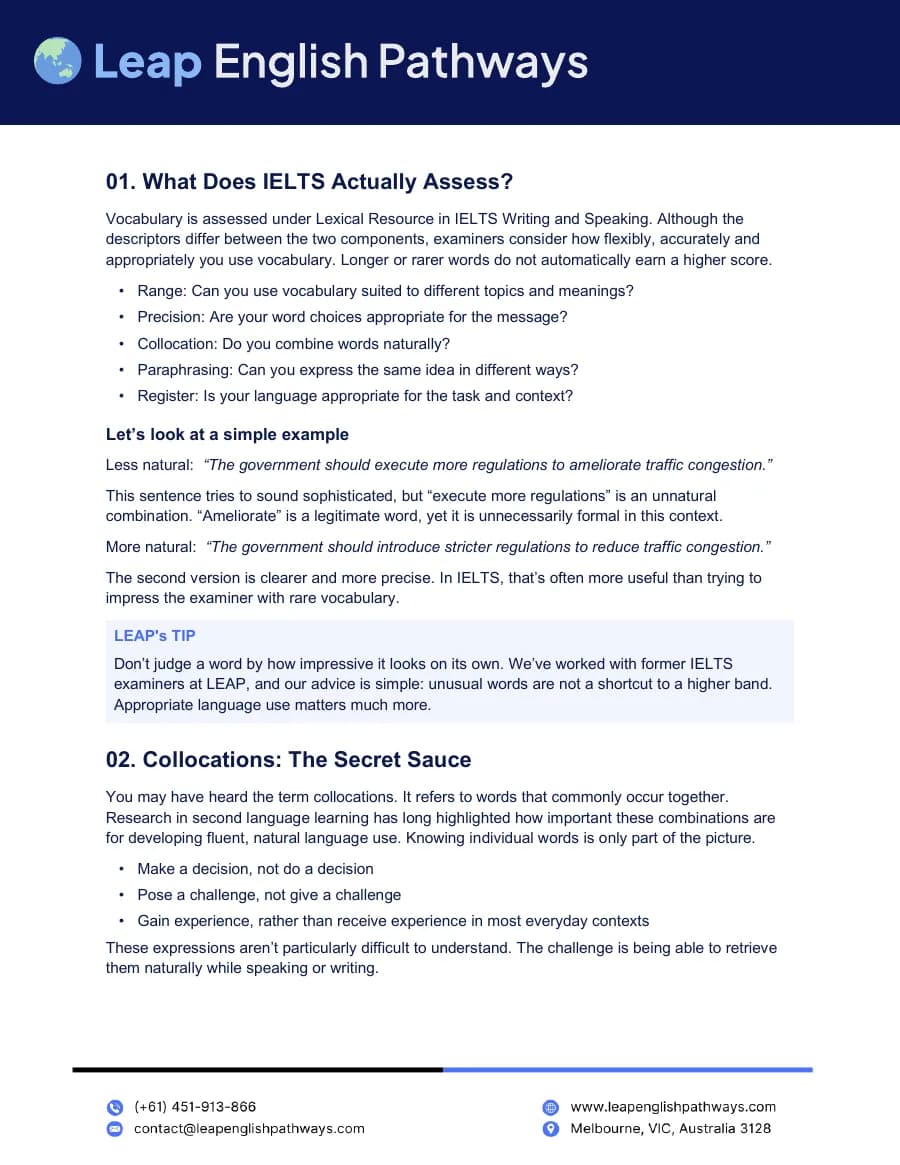
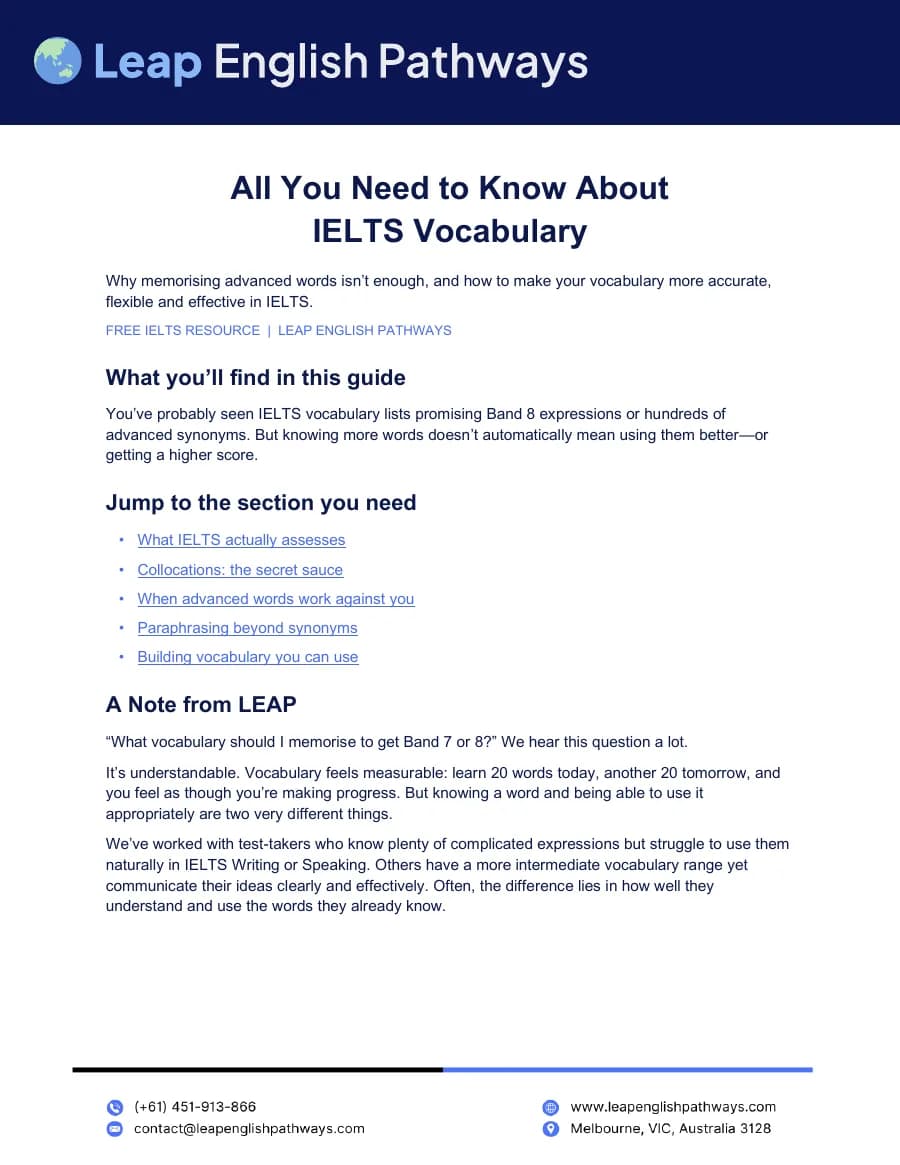
What's in the guide
5 pages in 5 parts. Find the part you need, then turn to its page.
- Page 2
What IELTS marks
Range, precise words, words that go together, paraphrasing and tone.
- Page 2
Collocations
Words that go together, and how to learn them from what you read and hear.
- Page 3
When advanced words hurt
Three ways a fancy word can cost you marks.
- Page 4
Paraphrasing
Saying the same idea with new words and a new structure.
- Page 4
A vocabulary routine
Five steps to learn words you can use in the test.
Tips from the guide
- Don't judge a word by how impressive it looks. An unusual word isn't a shortcut to a higher band.
- When you find a useful phrase in an article, podcast or lecture, write down the whole phrase, not one word.
- Practise paraphrasing ideas, not single words. Saying one idea in different ways helps well beyond IELTS.
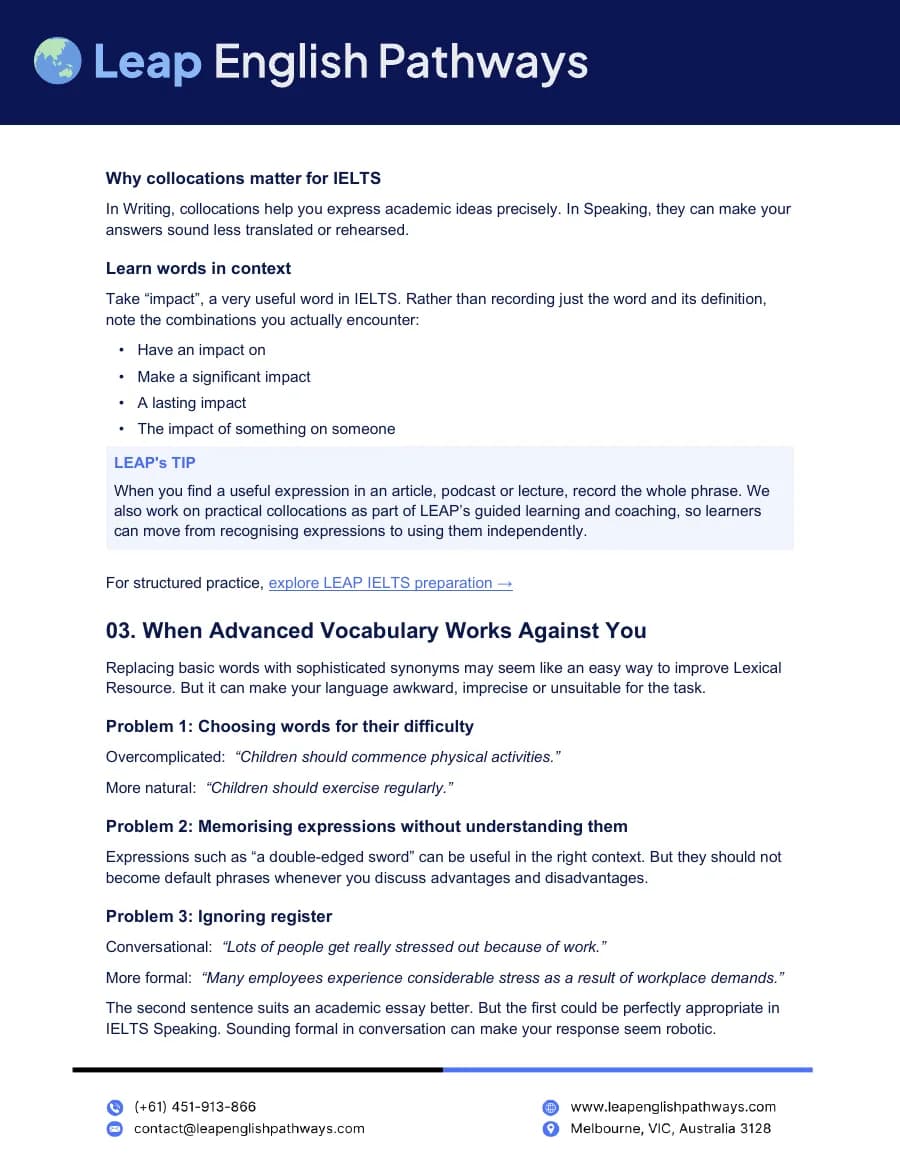
When advanced words hurt
Swapping basic words for fancy ones can make your English sound strange, or wrong for the task.
From page 3 of the guide.
Choosing a word because it's hard
- Too complex
- “Children should commence physical activities.”
- More natural
- “Children should exercise regularly.”
Learning phrases you don't understand
A phrase like “a double-edged sword” works in the right place. It shouldn't come out every time you talk about pros and cons.
Using the wrong tone
- Conversational
- “Lots of people get really stressed out because of work.”
- More formal
- “Many employees experience considerable stress as a result of workplace demands.”
The formal one suits an essay. The first can be fine in speaking, where a formal tone can make you sound like a robot.
Practise IELTS SpeakingIELTS Speaking testIELTS Writing test
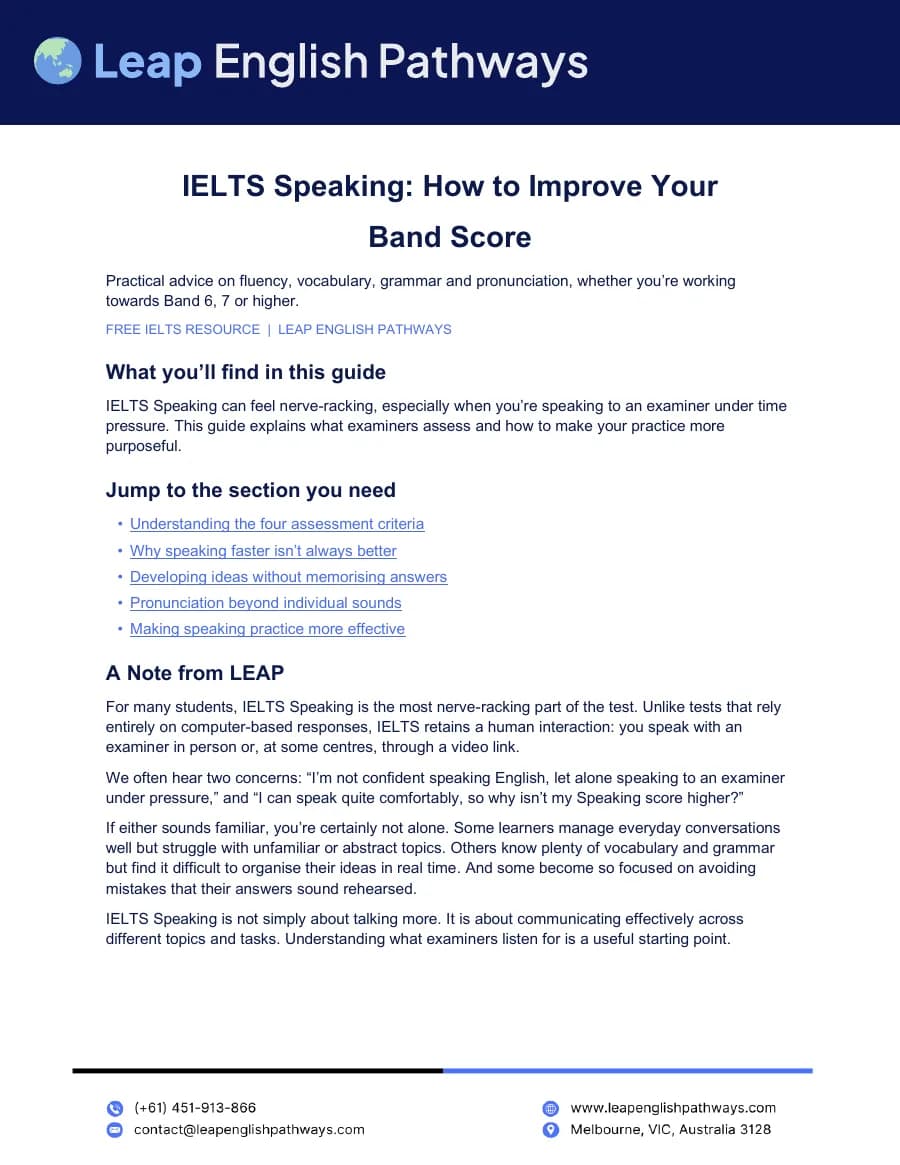
常见问题
Do I need advanced vocabulary for a high IELTS band?
What are collocations?
Is the PDF free?
获取 IELTS vocabulary guide