
What makes a strong IELTS Writing answer
The four criteria the examiner marks, the habits that hold a score back, and a routine for using feedback.
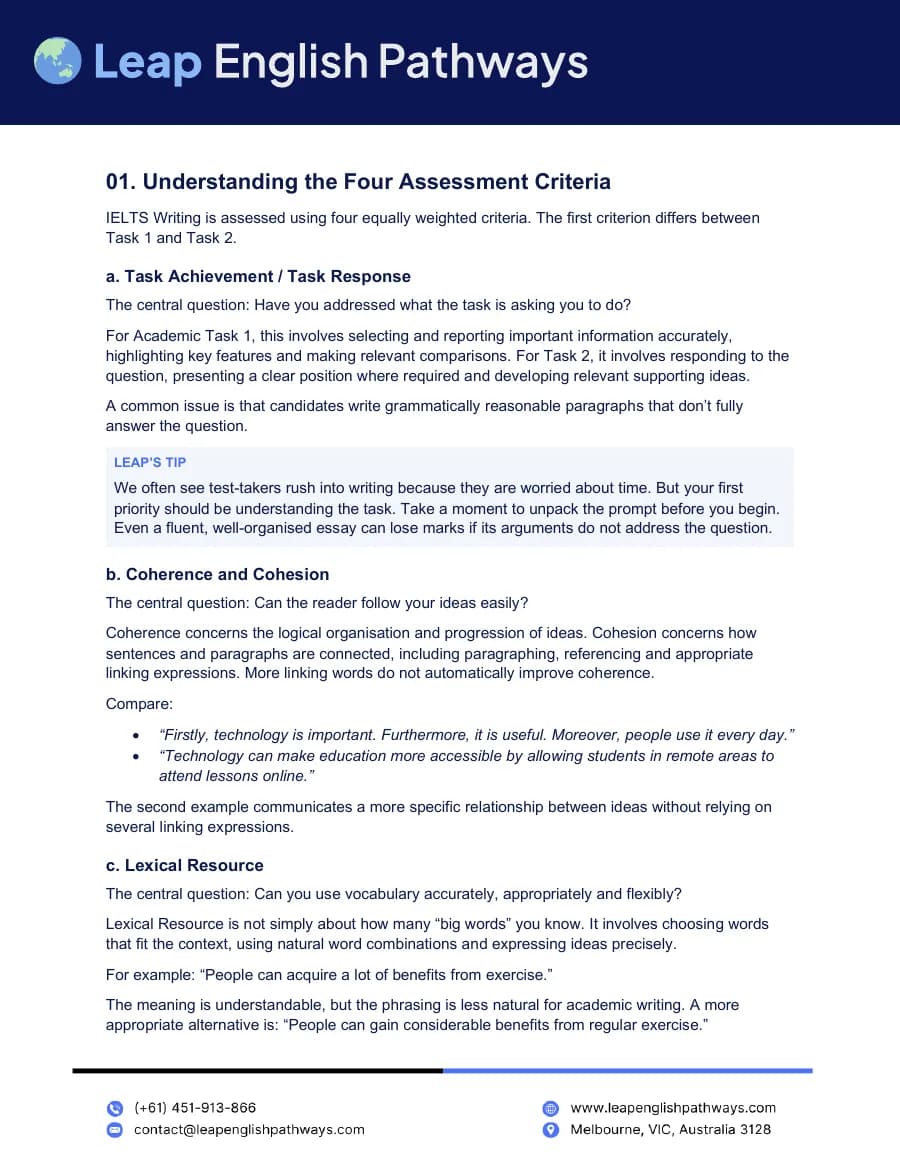

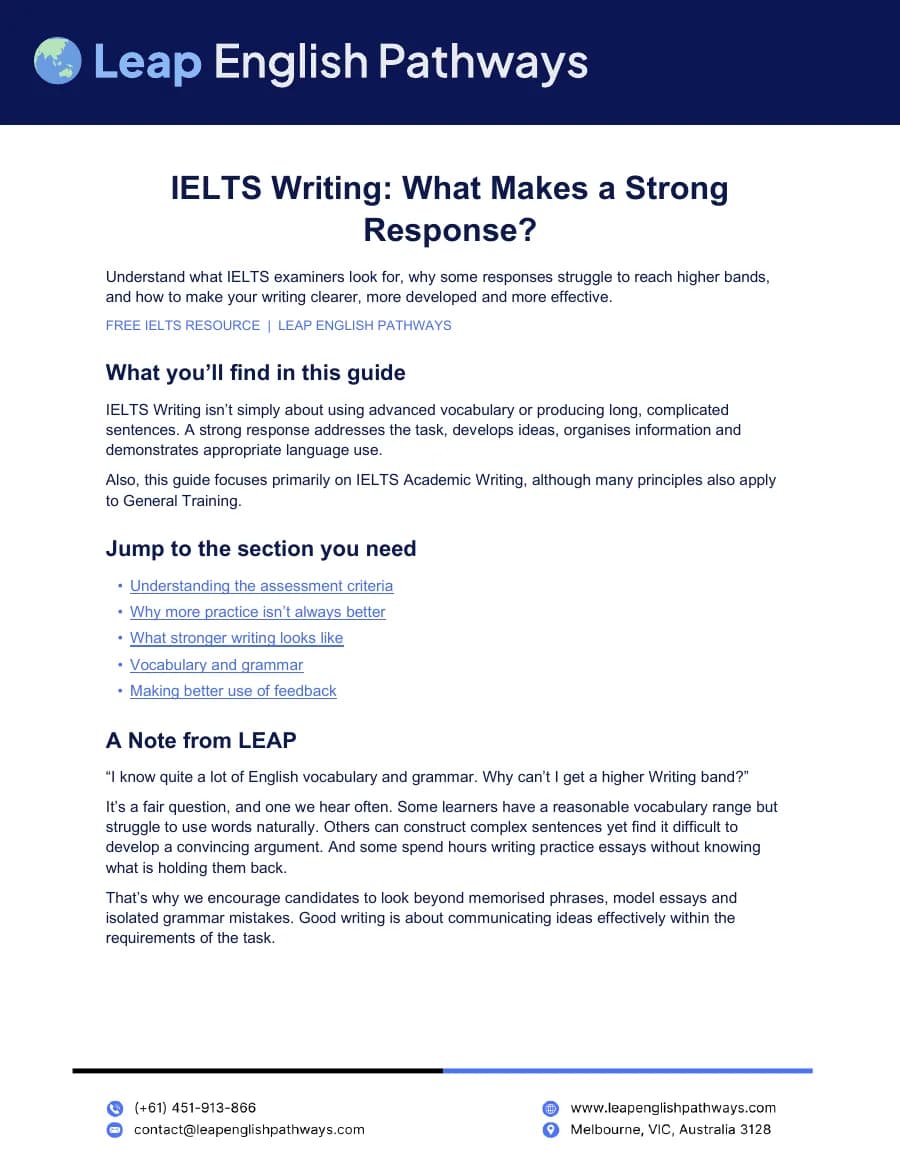
What's in the guide
6 pages in 5 parts. Find the part you need, then turn to its page.
- Page 2
The four criteria
Task response, coherence and cohesion, vocabulary and grammar, with examples.
- Page 3
More practice isn't always better
Three habits that keep a Writing score where it is.
- Page 4
What stronger writing looks like
Two paragraphs on the same question, and why the second is better.
- Page 5
Vocabulary and grammar
Pick the right word, not the hardest one, and use complex sentences when they help.
- Page 5
Using feedback
A four-step routine that turns corrections into better writing.
Tips from the guide
- Understand the task before you write. A fluent, well-organised essay still loses marks if it doesn't answer the question.
- Learn words that go together, such as “pose a challenge” and “draw a conclusion”, and use them when they fit.
- Rewriting one essay carefully can teach you more than writing several new ones you never check.
Two answers to one question
“Some people believe that universities should focus on preparing students for employment, while others argue that universities should prioritise academic knowledge. Discuss both views and give your opinion.”
From page 4 of the guide.
Example A: limited development
- The paragraph
- “Universities should prepare students for jobs because employment is very important. Students need skills, and universities should teach these skills. This can help students find good jobs in the future.”
The idea is relevant, but it stays general. It says employment is important again and again, without saying which skills students need or how a university could teach them.
Example B: more developed
- The paragraph
- “One argument for employment-focused university education is that graduates are increasingly expected to apply their knowledge in professional settings. By incorporating internships and industry-based projects into degree programmes, universities can help students develop practical skills while gaining experience relevant to their future careers.”
It names what employers expect, says how universities could respond and links that to a benefit for graduates. The longer words aren't what make it better. The reasoning is.
Practise IELTS WritingIELTS Writing Task 2IELTS Writing band descriptors
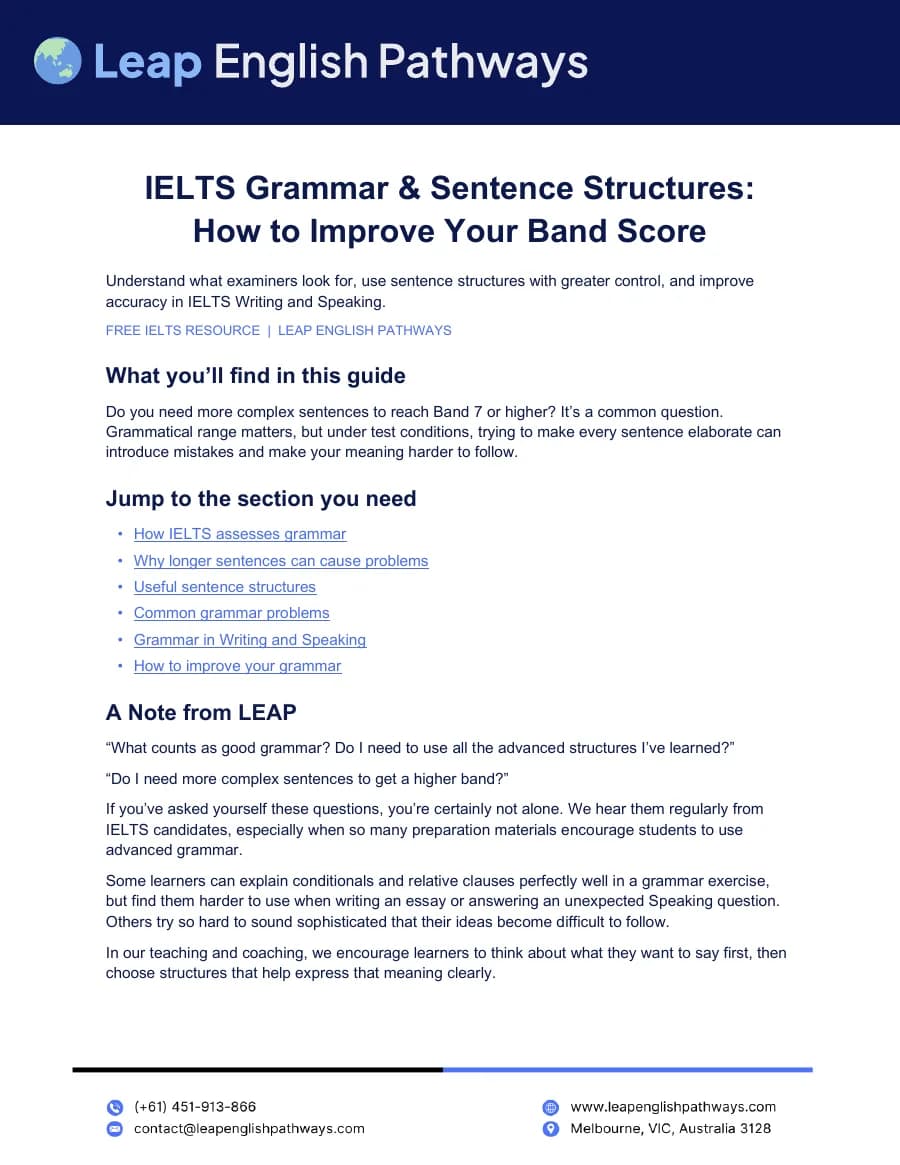
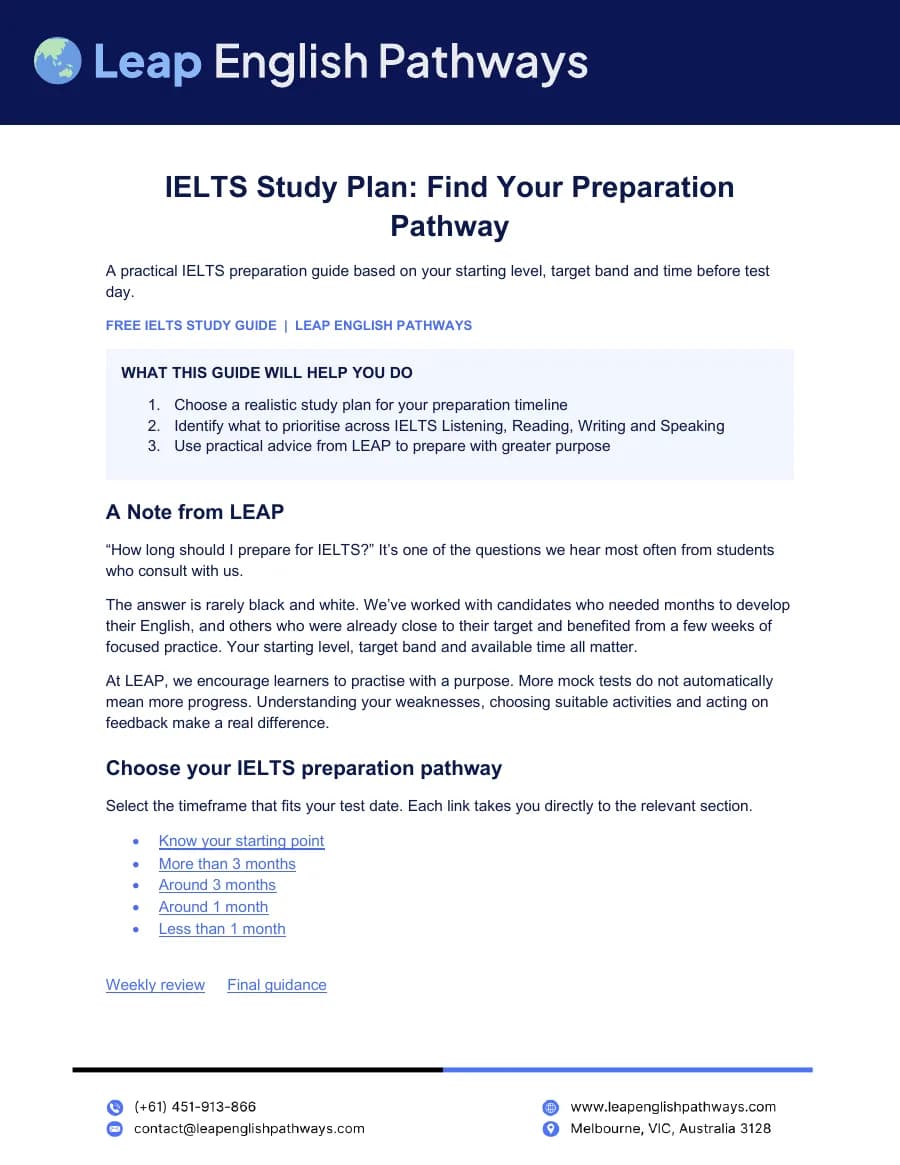
常见问题
What are the IELTS Writing criteria?
Will writing more essays raise my score?
Is the guide for Academic or General Training?
Is the PDF free?
获取 IELTS Writing guide