By Yilin Z., founder and academic director
Published

On this page
- Why it's hard to get an interview
- How employers read a CV
- What makes it harder for international students
- Mistake 1: a CV that's hard to read
- Mistake 2: a CV that tells your whole story
- Mistake 3: words that could describe anyone
- Mistake 4: tasks instead of results
- What strong CVs have in common
- Check your CV in 5 minutes
Why it's hard to get an interview
Only about 3% of job applications lead to an interview. A large 2025 analysis of more than 10 million applications from 27 studies found that people needed 42 applications, on average, to get one interview.
In 2026 it's getting harder. More graduates are looking for work, and layoffs, funding cuts and uncertainty around the world keep slowing hiring.
For international students and early-career professionals, it's harder still. You compete on skills in a second language, inside a hiring culture that may be new to you.
You may have heard it, or said it: “I applied to 100+ jobs. I only got 2 interviews. I don't know what I'm doing wrong.” This is more common than you think.
Most CVs don't fail because the person isn't qualified. Many international students have strong experience and a solid academic record. Their CVs fail because their value isn't clear straight away.
How employers read a CV
Think about how your CV is read, not how you write it. Employers scan it fast, often in under 10 seconds.
They don't read every line. They look for three signals, and if they can't see them, they move on:
- relevance
- clarity
- evidence
What makes it harder for international students
On top of the competition, international candidates often deal with more:
- visa limits on the jobs they can apply for
- not knowing what Australian employers expect
- no local work experience
- a writing style that sounds too academic, like a textbook
- trouble turning what they did into value for a business
- different ideas, from culture to culture, about how to present yourself
Mistake 1: a CV that's hard to read
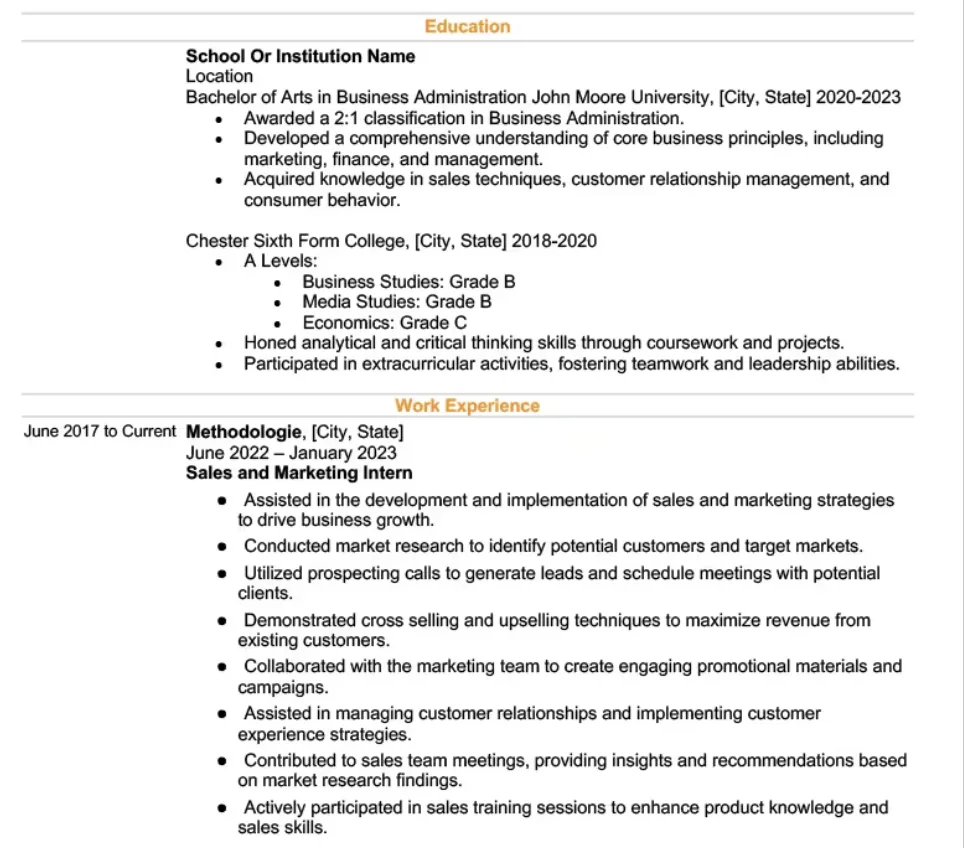
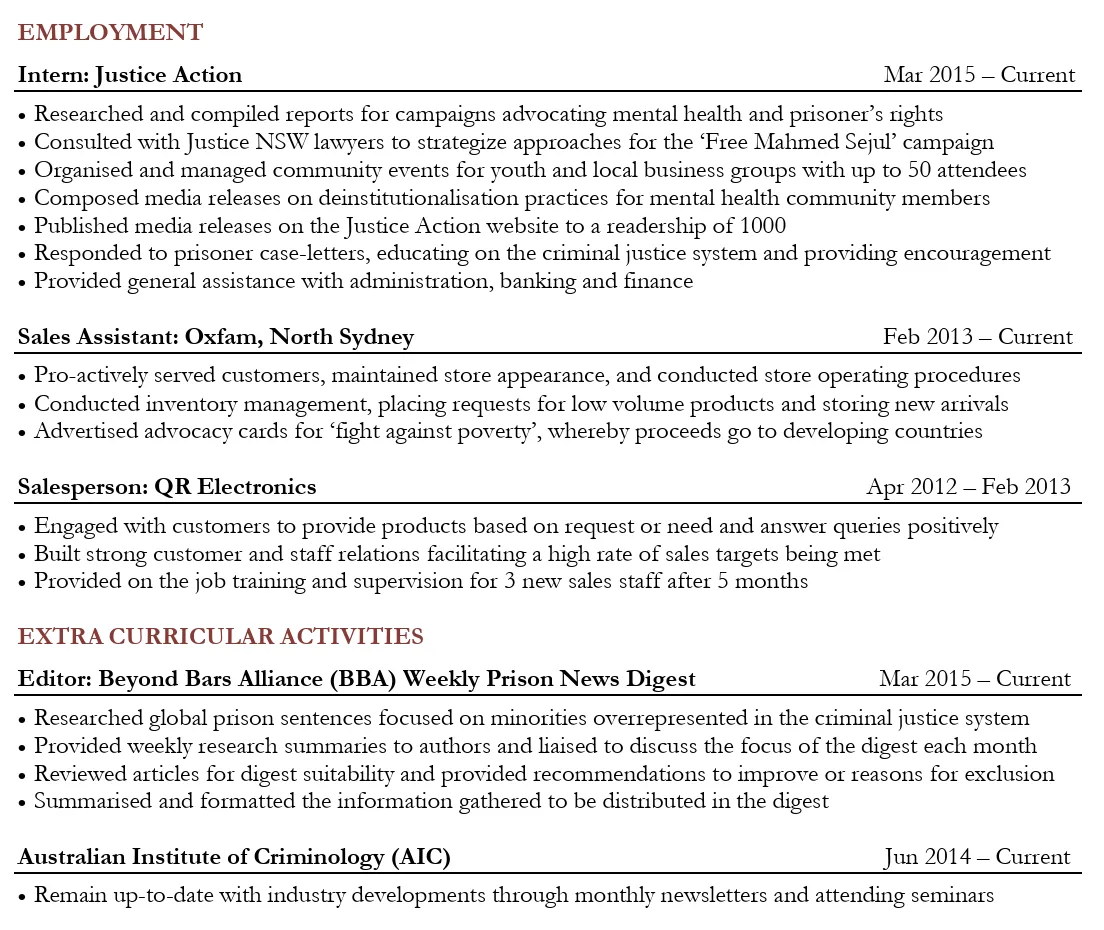
Format matters more than you think. If your CV is hard to read, nothing else in it gets looked at. Watch for:
- templates with too much design: lots of colours, icons and graphics
- lines and spaces that don't line up
- personal details such as a photo, your age or your nationality, which employers in Australia, the US, the UK and most Western countries don't expect
Hard to scan
Easy to scan
Mistake 2: a CV that tells your whole story
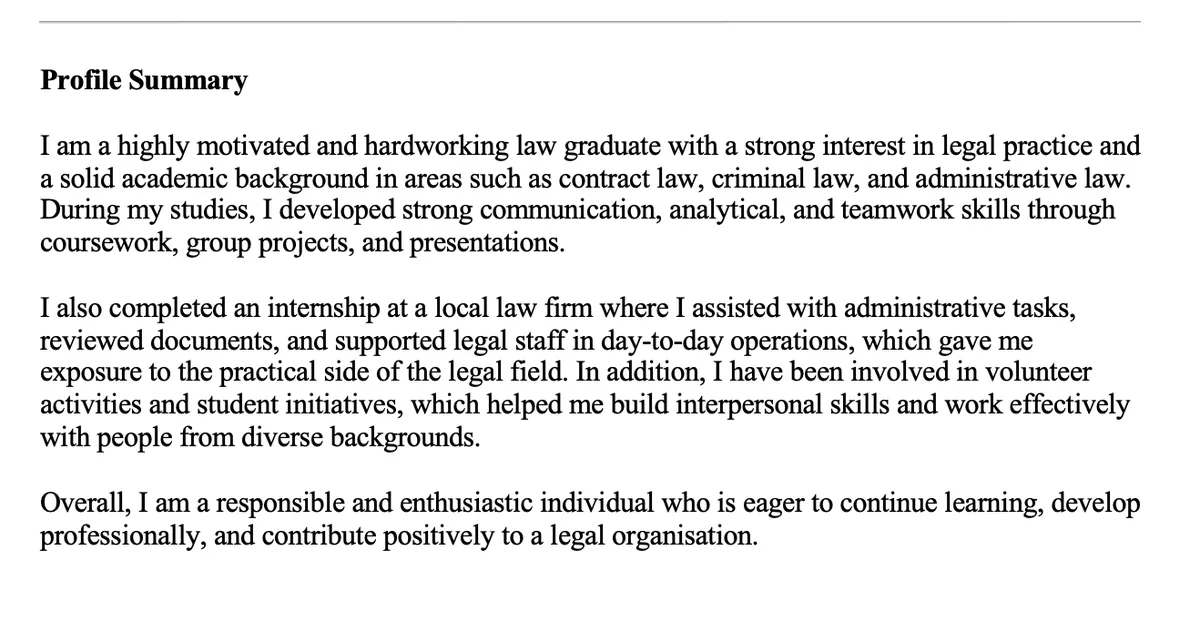
A CV isn't your life story. It's a selection of what matters. Weak CVs have long paragraphs, put everything in, and say “responsible for…” again and again.
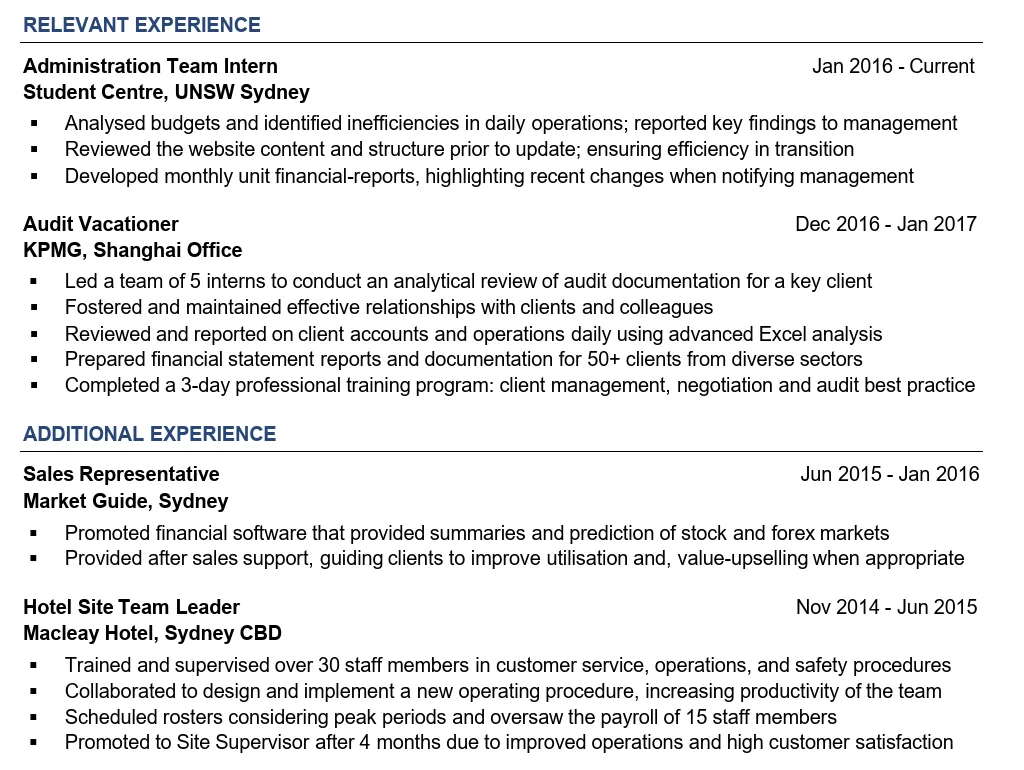
Strong CVs do three things instead:
- use clear words that can't be misread
- choose the experience that matters, rather than listing all of it
- show the impact and the results
Weak: a profile that tells the whole story
Strong: selective, with results
Mistake 3: words that could describe anyone
General words feel safe, but they say nothing. You may have strong skills and real interest, but without clear evidence the employer can't see them.
Weak example
“Highly motivated and results-driven individual with strong sales skills and a passion for banking and finance. Proven ability to build relationships with clients, meet sales targets, and work effectively in a team environment. Excellent communication and interpersonal skills, with the ability to understand customer needs and provide suitable financial solutions. Dedicated, and committed to delivering high-quality service and achieving organisational goals.”
Aim for something like this
“Managed a portfolio of 60+ retail clients, identifying financial needs and recommending suitable banking products, contributing to a 20% increase in monthly sales targets.”
Mistake 4: tasks instead of results
Many CVs say what the person was asked to do, not what they achieved. This isn't only true in technical jobs. It applies in every field, including education and the social sciences.
Compare two candidates applying for the same teaching job.
Candidate A
“Delivered engaging lessons to high school students. Built positive relationships and supported student learning. Managed classroom activities and maintained a productive environment.”
Candidate B
“Taught 120+ students across 5 classes, improving assessment scores by 18% within one term.”
What strong CVs have in common
In every industry, strong CVs show:
- Clarity. They're easy to read and quick to understand.
- Relevance. They match the job and the industry.
- Evidence. They show clear impact, scale and results you can measure.
- Readability. The layout is clean and well ordered.
- Purpose. Every section earns its place, instead of filling space.
Check your CV in 5 minutes
Go through your CV and ask:
- Can someone tell which job I want within 10 seconds?
- Do I give real examples, instead of general phrases?
- Do I show clear impact, with numbers, results and scale?
- Is my CV easy to scan, not dense or cluttered?
- Does it match what employers in Australia expect?
If you answered no to even one, that's likely where the problem is.